


 English
 中文简体
中文简体 русский
 Español
 عربى
عربىOperational Overview of an Intelligent Capacitor Online Monitoring System
Core Function and System Architecture
An Intelligent Capacitor Online Monitoring System represents an advanced integration of sensing, communication, and data analytics technology applied to power capacitor banks. Its core function is to provide continuous, real-time surveillance of key operational parameters, moving beyond simple reactive power compensation to become a predictive maintenance and grid management tool. The system architecture typically consists of multiple layers: field-mounted sensors on each capacitor unit or bank measuring parameters like current, voltage, and temperature; a local data acquisition unit that aggregates and processes this data; and a communication module that transmits information to a centralized software platform. This integrated architecture allows the Intelligent Capacitor Online Monitoring System to transform a passive component into an active, communicative node within the smart grid infrastructure.
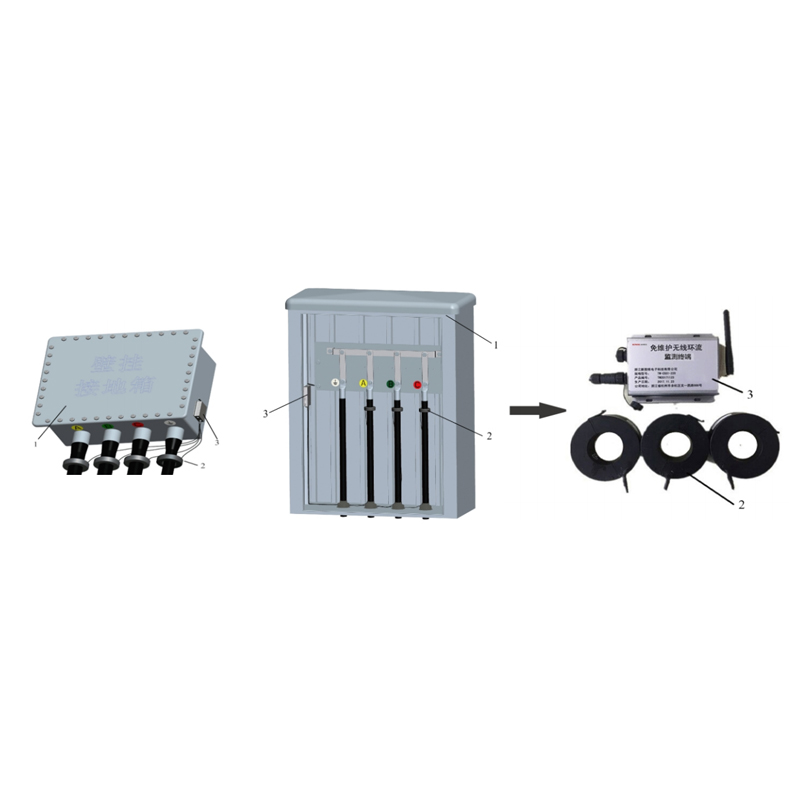
Key Monitoring Parameters and Sensing Technology
The effectiveness of an Intelligent Capacitor Online Monitoring System hinges on the accurate measurement of critical physical and electrical parameters. Core monitored metrics include:
Capacitance & Tan Delta: Sensors track the capacitance value and dielectric loss factor (tan delta) of individual units. A drift in capacitance indicates element failure, while a rising tan delta signals insulation degradation, allowing for pre-emptive replacement.
Unbalanced Current: Precise current monitoring between parallel capacitor strings detects failed fuses or elements long before a complete bank failure occurs.
Temperature: Thermal sensors monitor ambient and case temperatures, identifying overheating caused by harmonic currents, poor ventilation, or failing components.
Voltage & Current Harmonics: The system analyzes waveform distortion to assess stress on the capacitors and overall power quality.
Advanced non-invasive sensors and sophisticated algorithms enable this continuous diagnostics within the Intelligent Capacitor Online Monitoring System.
Data Analytics and Predictive Maintenance Algorithms
The true intelligence of the system lies in its data processing capabilities. The Intelligent Capacitor Online Monitoring System employs analytical algorithms to convert raw sensor data into actionable insights. By establishing baseline performance profiles, the system can detect subtle anomalies and trends indicative of incipient faults. Predictive models can forecast remaining useful life based on historical stress (temperature, voltage, harmonics) and degradation rates. This shift from time-based maintenance to condition-based maintenance is the primary value driver, enabling utilities and industrial operators to schedule interventions proactively, minimize unplanned outages, and optimize the lifecycle of expensive capacitor assets.
Communication Protocols and Integration with SCADA/DMS
For wide-area utility applications, the Intelligent Capacitor Online Monitoring System must communicate effectively with higher-level management systems. It uses standard industrial communication protocols like IEC 61850, DNP3, or Modbus to transmit status data, alarms, and detailed reports to a Supervisory Control and Data Acquisition system or a Distribution Management System. This integration allows grid operators to visualize the health of all capacitor banks across the network on a single dashboard, automate control decisions (like switching banks based on actual condition rather than just voltage), and incorporate capacitor health data into broader grid optimization and asset management strategies.
Impact on Grid Reliability and Operational Efficiency
The deployment of an Intelligent Capacitor Online Monitoring System delivers significant operational and financial benefits. It dramatically enhances grid reliability by preventing catastrophic capacitor failures that can cause outages or damage other equipment. Operational efficiency improves through reduced need for manual inspections, optimized maintenance schedules, and extended asset life. Furthermore, by ensuring capacitors are operating within their optimal parameters, the system maintains better power factor correction and voltage support, contributing to overall grid stability and energy efficiency. The Intelligent Capacitor Online Monitoring System thus represents a critical investment in modernizing grid infrastructure, transitioning from reactive repair to intelligent, data-driven asset management.
Recommended Products
The variety of models, to meet the development needs of various regions in the world.
Copyright © Shanghai Yongjin Electric Technology Co.,Ltd.

China Power Quality Solutions Supplier