English
 中文简体
中文简体 русский
 Español
 عربى
عربى
Industry News
Home / News / Industry News / Can a Reactive Power Compensation Device Solve Harmonic Distortion Problems?
Harmonic distortion causes all kinds of costly issues in electrical systems. Motors and transformers run hotter than normal, capacitors fail early, and circuit breakers trip for no clear reason. For factories and commercial buildings, that means extra maintenance and unplanned downtime. Reactive power compensation devices are widely used to improve power factor and reduce reactive power demand from the grid. But do they also fix harmonic distortion? Not necessarily. How it works out depends on what kind of equipment you install and the specific conditions of your electrical network. A standard capacitor bank may boost power factor but can make harmonics worse if resonance kicks in. Detuned capacitor banks and harmonic filters handle the problem differently. Understanding how they work makes it easier to pick the right solution for your setup.
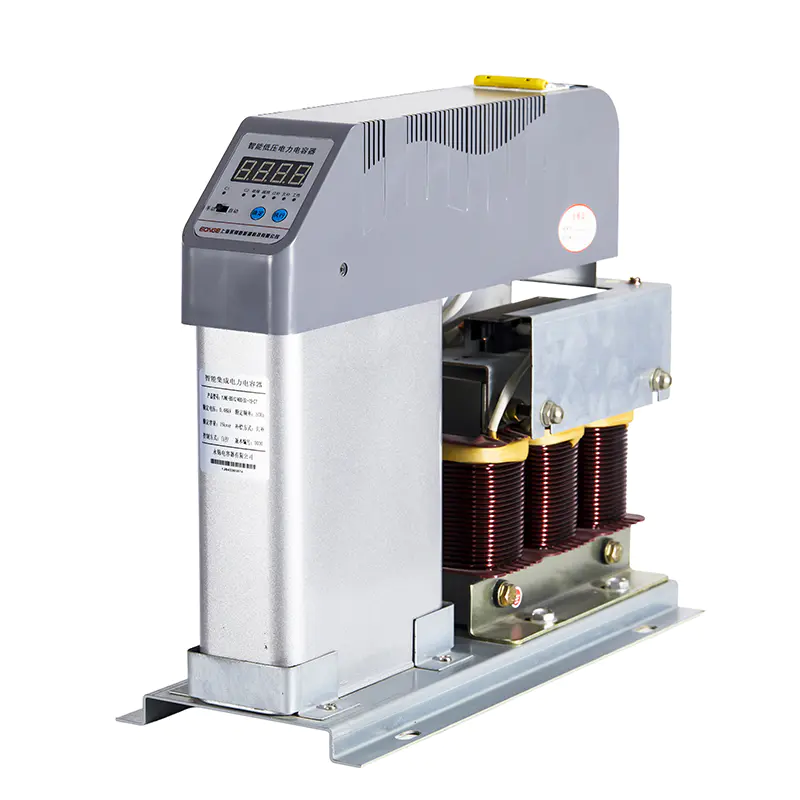
Harmonics occur when voltage or current has frequency components that are whole-number multiples of the base power frequency. On a 50 Hz system, for example, the fifth harmonic sits at 250 Hz. These unwanted components almost always come from nonlinear loads. Unlike simple resistive loads that draw smooth sinusoidal current, this equipment pulls current in uneven, distorted pulses. Common sources include variable frequency drives, switching power supplies, UPS systems, LED lighting, and industrial rectifiers. When harmonic currents build up, a string of problems follow: equipment overheats, breakers trip unexpectedly, sensitive electronics pick up interference, and capacitors fail prematurely. Engineers use total harmonic distortion (THD) to measure waveform quality. Current THD and voltage THD provide different insights, so both may need measuring when troubleshooting power quality issues.
Reactive power compensation mainly helps equipment use power more efficiently by improving power factor. Motors and transformers need reactive power to maintain their magnetic fields. Without local compensation, the grid has to supply all of it. Capacitor banks provide much of this power close to the load, cutting down strain on the upstream network. Compensation systems may use fixed or automatic capacitor banks, static var generators (SVG), or static VAR compensators (SVC), depending on the application. The key thing to remember: improving power factor is not the same as removing harmonics. Conventional capacitor banks do not automatically filter harmonic currents. In some systems, they can even increase distortion due to resonance between capacitors and network inductance. Reactive power compensation and harmonic control are related, but separate functions. It’s important to know what your equipment is actually designed to do.
Different devices handle power factor and harmonics in different ways.
| Equipment type | Main purpose | Effect on harmonics |
|---|---|---|
| Conventional capacitor bank | Improve power factor | May amplify harmonics if resonance occurs |
| Detuned capacitor bank | Correct power factor while reducing resonance risk | Helps prevent harmful harmonic amplification |
| Passive harmonic filter | Target selected harmonic frequencies | Reduces specific harmonics when properly designed |
| Active harmonic filter | Compensate for harmonic currents | Can reduce several harmonic orders within its rated capacity |
| SVG or STATCOM | Provide dynamic reactive power compensation | Harmonic reduction depends on the model and its filtering functions |
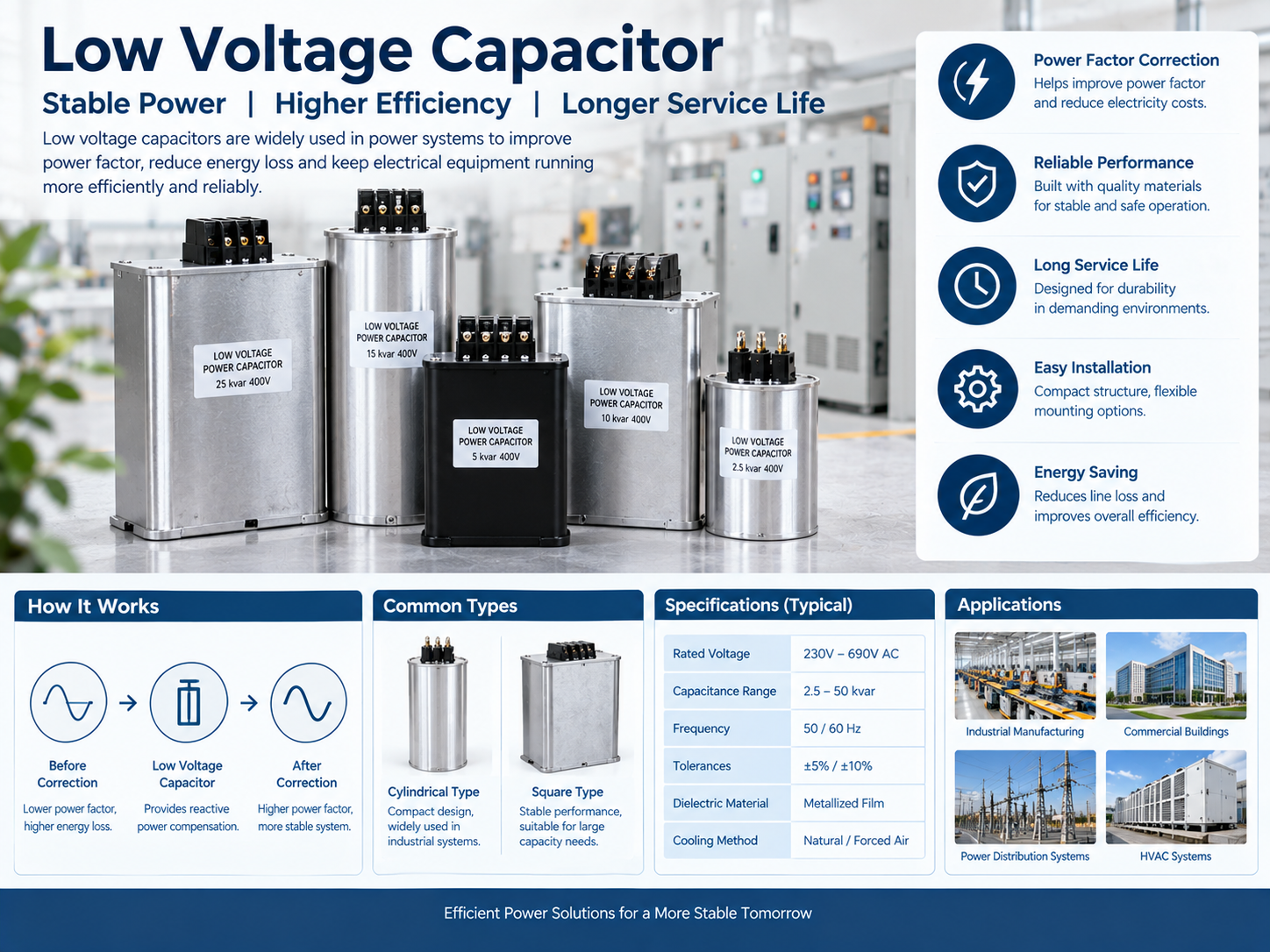
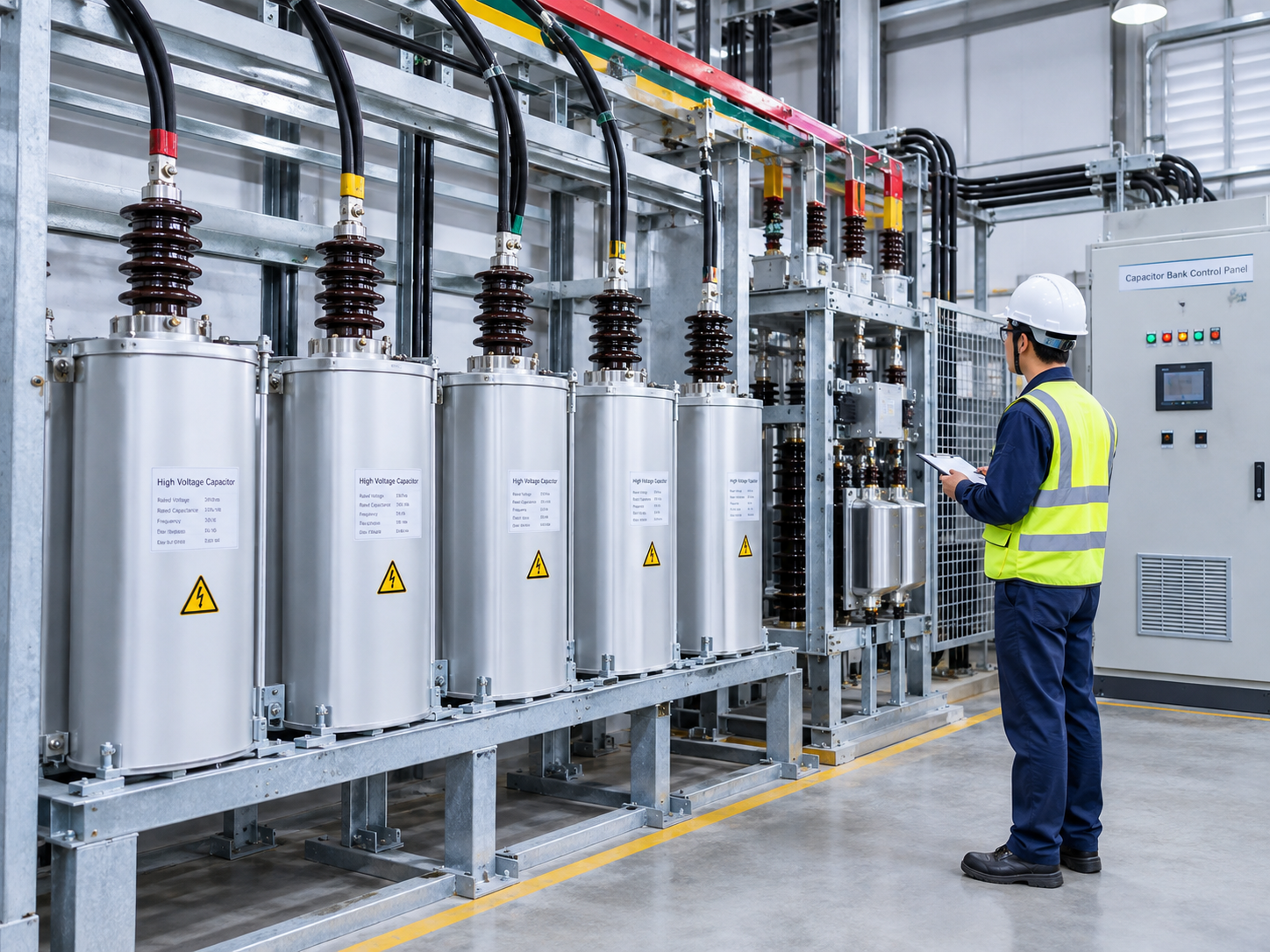
Conventional capacitor banks are common for power factor correction, but they interact with inductance from transformers, cables, and other network components. Under certain conditions, this creates resonance near a harmonic frequency, which can spike harmonic currents and damage capacitors. Always check network harmonic levels and impedance before installing conventional banks, especially in facilities with many variable frequency drives or rectifiers.
Detuned capacitor banks pair capacitors with series reactors that shift the circuit’s frequency response, lowering resonance risk at problematic harmonic frequencies. They work well for setups needing power factor correction with moderate harmonic concerns, but ratings must match the actual system. They reduce resonance risk but don’t eliminate all harmonics, so extra filtering may still be needed.
Active harmonic filters monitor system harmonic currents and generate canceling currents to reduce them. They adapt to changing loads and handle multiple harmonic frequencies within their rated capacity. Some SVG and STATCOM products include harmonic filtering, but others focus only on reactive power regulation. Don’t just assume every compensation device does both — always check the tech specs.
Start by measuring your electrical system. Picking equipment based only on power factor can make you miss the root cause of the problem. Step 1: Measure power quality — check voltage THD, current THD, individual harmonic orders, and power factor. Record load conditions during testing, since results shift as equipment turns on and off. Step 2: Find main harmonic sources. Check variable frequency drives, rectifiers, UPS units, and other nonlinear loads to see if distortion comes from one machine or the wider network. Step 3: Check for resonance. Before adding capacitors, assess network impedance and harmonic spectrum to decide if detuned compensation or extra filtering is needed. Step 4: Match equipment to the problem. Conventional capacitors work for basic power factor correction; detuned banks reduce resonance risks; passive or active filters address specific harmonic needs. Step 5: Retest after installation under comparable conditions to confirm both power factor and harmonic levels meet expectations. Standards like IEEE 519 and relevant IEC guidelines can help set assessment criteria. Exact requirements depend on the installation, local rules, and measurement location.
A common mistake is assuming higher power factor automatically means lower harmonic distortion. A system can have improved power factor while still having excessive harmonic currents. Another error is installing capacitors without checking for resonance first, which can ramp up electrical stress instead of improving power quality. It’s also unwise to compare equipment only by kVAr rating. Harmonic filtering capacity, supported frequencies, control response, and installation location all matter, and should be checked against your facility’s measured conditions.
A reactive power compensation device can improve power factor, but it won’t necessarily solve harmonic distortion. Conventional capacitor banks mainly address reactive power demand. Detuned banks reduce resonance risks, while dedicated harmonic filters provide more direct control of harmonic currents. For facilities with nonlinear loads, the sensible approach is to measure the problem, check for resonance, and select equipment based on results. This lets engineers improve power factor without creating new power quality issues down the line.
The variety of models, to meet the development needs of various regions in the world.
Copyright © Shanghai Yongjin Electric Technology Co.,Ltd.

China Power Quality Solutions Supplier