


 English
 中文简体
中文简体 русский
 Español
 عربى
عربى
Industry News
High Voltage Capacitor Vs Low Voltage Capacitor Difference
Why Do Electrical Systems Use Different Voltage Level Capacitors?
Electrical systems rarely stay in one fixed condition. Voltage rises and falls depending on load, distance, switching actions, and the way energy moves through circuits. In that environment, capacitors take part in short cycles of storing and releasing energy, helping the system stay closer to balance.
High Voltage Capacitor and Low Voltage Capacitor appear in different parts of the same electrical structure. The separation is not only about strength level. It also comes from how much electrical stress exists in each section of the circuit and how energy behaves there.
In real use, voltage level influences:
- how strong the insulation inside the capacitor needs to be
- how internal layers are spaced and arranged
- how heat builds up during continuous operation
- how the device reacts when load changes suddenly
When a capacitor is placed in the wrong voltage environment, operation becomes less stable, and surrounding components may also feel the effect.
What Is A High Voltage Capacitor In Practical Electrical Use?
High Voltage Capacitor is used in areas where electrical pressure is relatively higher and energy movement is more demanding. Inside, structure is arranged to handle stronger electric fields without losing stability.
Typical internal structure includes:
- layered conductive plates separated by dielectric material
- reinforced insulation between active zones
- wider spacing to manage electric stress
- outer casing designed to support electrical isolation
During operation, energy is held inside the electric field formed between layers. When system demand shifts, stored energy is released back into the circuit in a controlled way.
In practical installation, High Voltage Capacitor often sits in upstream sections of power systems, where energy flow is less stable and requires stronger buffering support.
What Defines A Low Voltage Capacitor In Real Use?
Low Voltage Capacitor works in environments where electrical stress is lighter and more localized. Structure is usually simpler, focusing on stable performance in compact circuits.
Common characteristics include:
- shorter distance between internal conductive layers
- reduced insulation thickness compared with higher voltage types
- quicker response in smaller load changes
- easier integration into compact equipment
Low Voltage Capacitor is often placed closer to end-use equipment, where energy demand is more direct and changes happen in smaller steps.
What Actually Separates High Voltage Capacitor And Low Voltage Capacitor?
Difference between both types is not limited to strength rating. It spreads across structure, behavior, and working position inside electrical systems.
| Aspect | High Voltage Capacitor | Low Voltage Capacitor |
|---|---|---|
| Working area | higher stress zones | localized circuit zones |
| Internal spacing | wider separation | tighter layout |
| Insulation design | reinforced structure | compact insulation |
| Energy handling | broader fluctuation range | smaller variation range |
| Installation point | system level support | end circuit support |
Even though basic function stays similar, behavior changes depending on where each capacitor sits inside the system.
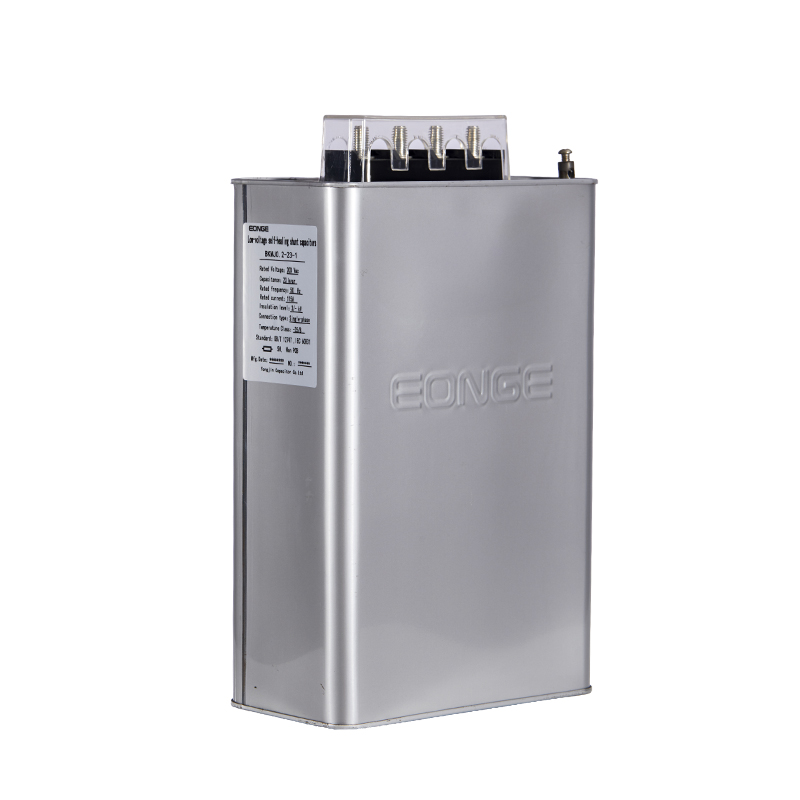
How Do High Voltage Capacitor Banks Work In Electrical Systems?
High Voltage Capacitor Bank is formed by connecting multiple capacitors together so they act as one system unit. Instead of handling energy individually, they share load across several components.
Inside such arrangement, behavior becomes more coordinated:
- energy is stored during voltage rise periods
- energy is released during voltage drop conditions
- fluctuations in power flow become more controlled
- reactive power inside system is partially balanced
A capacitor bank usually operates in sections where energy changes are more noticeable. Grouping allows stress to spread instead of concentrating in a single unit.
What Role Does Low Voltage Capacitor Bank Play In Distribution Areas?
Low Voltage Capacitor Bank works in smaller, more local sections of electrical networks. Focus is not on large system fluctuations, but on balancing nearby load conditions.
In practical operation, it supports:
- correction of small power imbalance in local circuits
- smoothing of voltage variation near end equipment
- assistance to nearby electrical loads during demand changes
- reduction of small fluctuations in distribution points
Instead of handling large system energy shifts, low voltage grouping focuses on fine adjustment in closer circuit areas.
How Does Voltage Level Change Capacitor Behavior?
Voltage level directly influences how internal materials respond during operation. Electrical stress inside capacitor structure changes depending on operating environment.
When voltage level is higher:
- internal insulation experiences stronger electrical force
- heat buildup becomes more noticeable during long operation
- material behavior must remain stable under stronger stress
- energy storage and release feel more dynamic
When voltage level is lower:
- internal stress stays relatively controlled
- response to load changes feels smoother
- insulation demand becomes lighter
- integration into small circuits becomes simpler
Voltage level shapes not only capability, but also how the component behaves during continuous use.
Why Does Insulation Design Change Between Voltage Levels?
Insulation inside capacitors acts as separation layer between conductive parts. Its role becomes more sensitive as voltage increases.
In high voltage design:
- insulation must resist stronger electrical pressure
- internal spacing is adjusted to maintain stability
- structure is arranged to avoid electrical breakdown paths
In low voltage design:
- insulation focuses more on compact structure
- material thickness can remain lighter
- design supports quick response in small systems
Insulation choice always follows the working environment rather than appearance or size.
How Do Capacitors React When Load Changes?
Electrical load does not stay constant. It shifts depending on usage, switching behavior, and system demand.
When load increases:
- capacitors absorb part of sudden energy change
- voltage variation becomes more controlled
- stress spreads across supporting components
When load decreases:
- stored energy returns into circuit gradually
- system voltage settles step by step
- imbalance reduces through controlled release
Both high voltage and low voltage types take part in this balancing process, each at different points of the system.
What Happens When Capacitor Type Does Not Match System Voltage?
Mismatch between capacitor rating and system condition affects internal stability.
Possible effects include:
- uneven stress inside dielectric material
- unstable energy storage behavior during operation
- faster change in internal wear pattern
- irregular response during load fluctuation
Over time, system behavior may become less predictable as component condition drifts away from intended operating range.
Why Do Both Capacitor Types Appear In The Same System?
Large electrical systems are often built in layers. High voltage sections handle broader energy movement, while low voltage sections handle local adjustment.
Working together allows:
- energy distribution across different circuit levels
- smoother transition between high and low zones
- reduced pressure on individual components
- more stable overall electrical behavior
Each type plays a different role in the same energy path, depending on position inside the system.
How Do Capacitor Banks Behave When Load Keeps Changing?
In real electrical systems, load rarely stays still. Equipment turns on and off, current demand rises and falls, and energy paths keep shifting. Capacitor banks sit inside that movement and respond in a quiet balancing way.
When load increases, energy inside the system becomes more tense. Capacitor groups absorb part of that change, reducing sudden pressure on the circuit. When load drops, stored energy moves back into the system in a slower release, softening the transition.
High voltage capacitor banks usually sit in sections where changes feel wider and more intense. Low voltage capacitor banks stay closer to end circuits where adjustments are smaller, more frequent, and easier to control.
A simple way to picture the behavior:
- high voltage side handles broad swings in energy flow
- low voltage side handles small corrections near equipment
- both sides work at different rhythm rather than the same timing
Why Does Heat Behavior Change With Voltage Level?
Heat inside a capacitor does not come from a single cause. It builds from repeated electrical movement inside the structure. When voltage level increases, internal electric stress becomes stronger, and that affects how heat appears during operation.
In high voltage conditions:
- internal layers feel stronger electrical pressure
- heat spreads across a wider internal area
- insulation needs to stay stable under continuous stress
In low voltage conditions:
- heat stays more contained inside smaller areas
- response to changes feels quicker
- temperature shifts are usually easier to settle
Heat often reflects how hard the internal structure is working rather than just how big the component looks.
What Happens To Internal Materials Over Time?
Inside every capacitor, dielectric material separates conductive layers. It quietly handles all the electrical stress during operation.
With repeated use:
- In high voltage environments
- material experiences stronger field pressure
- small changes in structure may develop gradually
- insulation consistency becomes more important for stability
- In low voltage environments
- electrical stress stays lighter
- changes appear more slowly
- wear tends to spread in a more even pattern
Nothing changes suddenly. The shift is gradual, built from many small cycles of charge and discharge.
How Does System Position Influence Capacitor Choice?
Where a capacitor is placed inside a system often matters as much as its rating.
High voltage capacitors are usually found in upper sections of power flow, where energy moves across longer distances or higher stress points. Low voltage capacitors sit closer to end use areas, where energy is consumed in smaller steps.
A simple layer view:
- upper layer: energy transfer across wider network
- middle layer: balancing and distribution
- lower layer: direct consumption and fine adjustment
Capacitor type follows these layers rather than working in isolation.
How Do Capacitors Help Keep Electrical Flow Stable?
Electrical flow is not perfectly smooth. It shifts with every change in load or switching action. Capacitors act as temporary buffers, holding energy during rise periods and releasing it during drops.
High voltage capacitors support stability in larger fluctuation zones. Low voltage capacitors handle smaller adjustments closer to equipment.
Together, the effect becomes layered:
- large swings become softer
- small variations become less noticeable
- overall flow feels more controlled across the system
Stability comes from coordination rather than a single component.
What Happens When Voltage Rating Does Not Match System Needs?
A mismatch between capacitor rating and system voltage does not always show immediate problems. Early operation may still look normal. Over time, internal stress becomes uneven.
Possible behavior changes include:
- insulation experiencing higher than expected pressure
- energy storage becoming less consistent
- response to load change feeling irregular
- surrounding components carrying extra burden
The effect builds slowly, often noticed only after long operation cycles.
How Do Design Differences Shape Application Use?
High voltage and low voltage capacitors may look similar from outside, yet internal structure tells a different story.
High voltage design usually focuses on:
- stronger insulation layers
- wider internal spacing
- stable structure under stronger electric fields
Low voltage design leans toward:
- compact internal layout
- faster response in smaller circuits
- easier integration into tight spaces
Design reflects environment rather than appearance.
How Do Capacitor Banks Work With System Control?
Many systems connect capacitor banks with control units that monitor voltage changes. These controls decide when to switch groups in or out of operation.
In practice:
- capacitor groups activate during load increase
- groups reduce activity when demand stabilizes
- switching happens in steps rather than sudden changes
Control systems do not change the capacitor itself, only how and when it participates in the circuit.
Why Do Systems Combine Both Voltage Levels?
Electrical systems often rely on layered structure. High voltage capacitors manage broader energy movement, while low voltage capacitors handle local adjustment.
This combination helps:
- distribute electrical stress across different levels
- reduce pressure on single circuit zones
- keep energy flow smoother across multiple points
Each type handles a different part of the same flow, working in parallel rather than competing roles.
High voltage capacitor and low voltage capacitor share the same basic purpose of energy balancing, yet their behavior changes with system position and electrical stress level.
One works in higher stress zones with broader energy variation. The other works closer to end circuits with smaller, more frequent adjustments. Together, they support a layered and steady electrical environment without needing complex control from a single point.
Recommended Products
The variety of models, to meet the development needs of various regions in the world.
Copyright © Shanghai Yongjin Electric Technology Co.,Ltd.

China Power Quality Solutions Supplier