


 English
 中文简体
中文简体 русский
 Español
 عربى
عربى
Industry News
Low Voltage vs High Voltage Capacitor Which One Fits Your System
Capacitors show up everywhere in electrical systems. They store energy for short periods. They smooth out voltage dips. They correct power factor, which keeps utility bills lower and equipment running more efficiently. Engineers have relied on them for generations. Yet not every capacitor does the same job. The voltage rating printed on the side tells a lot about where that unit belongs.
A low voltage capacitor is built for systems that operate below a certain threshold. A High Voltage Capacitor handles the big stuff—transmission lines, heavy industrial gear, substations. The distinction is not arbitrary. The construction differs. The cost differs. The maintenance demands differ.
For years, the division between low and high voltage was clear. Each had its territory, and the two did not overlap much. That has changed. The growth of distributed generation, rooftop solar, and small-scale storage has pushed low voltage equipment into roles that once belonged exclusively to larger units. The boundaries have become less rigid, and the decision between the two voltage classes now involves more factors than it used to.
Where Low Voltage Capacitors Are Gaining Ground
A low voltage capacitor has become a familiar sight in commercial buildings. Offices, retail spaces, and small industrial facilities have adopted them widely. The reasons are practical. A low voltage unit can be mounted in an electrical room or even on a wall. It does not need a dedicated substation. It does not require the clearance and safety zones that high voltage gear demands.
The modular design of low voltage equipment adds to the appeal. A facility manager can start with a few units and add more as needs grow. The expansion does not require a shutdown or a major engineering effort. The new units simply connect in parallel, and the system capacity increases.
Renewable energy has also driven adoption. Solar panels on commercial rooftops produce power at lower voltages. The inverters that convert DC to AC operate at those same levels. A low voltage capacitor fits naturally into that environment. It provides reactive power support right where the generation occurs, improving the quality of the power fed into the building or the grid.
The safety factor should not be overlooked. Working on low voltage equipment carries less risk than working on high voltage. Electricians can access panels without the same level of protective gear. The lower energy levels reduce the chance of arc flash incidents. For facilities that do not have specialized high voltage staff, the low voltage equipment is easier to manage.
Maintenance is simpler as well. The units are smaller and lighter. They can be replaced or serviced without heavy lifting equipment. The reduced complexity translates to lower operational costs over the life of the system.
When the Low Voltage Option Outperforms the High Voltage Alternative
There are situations where a low voltage capacitor does the job better than a High Voltage Capacitor. The difference shows up in several areas.
One such situation involves loads that change frequently. A manufacturing line with varying production levels draws different amounts of reactive power at different times. Low voltage units can switch in and out quickly. Their response time is measured in cycles, and they keep the power factor within a tight range. A High Voltage Capacitor is not designed for that kind of duty. It handles larger blocks of power, but it does not adapt as readily to rapid changes.
Cost is another factor. A High Voltage Capacitor costs more to manufacture, more to install, and more to maintain. The savings on a low voltage installation can be significant. For a commercial building with a modest reactive power demand, the extra capacity of a high voltage unit would be wasted. The low voltage choice provides what is needed without the overhead.
| Factor | Low Voltage Units | High Voltage Units |
|---|---|---|
| Initial outlay | Lower | Higher |
| Floor space | Modest | Considerable |
| Switching ability | Faster | Slower |
| Fit for small loads | Appropriate | Oversized |
| Servicing | Straightforward | More involved |
| Common settings | Commercial, small industrial | Transmission, large industrial |
In some applications, the choice is obvious. A small office building with a few air handlers and some lighting does not need high voltage equipment. The low voltage solution is more than adequate. The installation goes quickly. The payback period is shorter. The system is easier to manage.
The modularity of low voltage equipment also allows for a phased approach. A facility can add capacitance as the load grows. The capital outlay matches the actual demand. There is no need to pay for unused capacity upfront.
The Enduring Role of High Voltage Equipment
Despite the growth of low voltage applications, the High Voltage Capacitor remains essential. Transmission networks cannot function without them. The distances involved in moving power from generating stations to load centers create a need for bulk reactive power compensation. That need is met at high voltages, not low.
Industrial users with large motors represent another area of demand. A single large induction motor draws significant reactive power. A bank of High Voltage Capacitors provides the correction. The equipment is designed for continuous duty. It handles the load without complaint.
The construction of a High Voltage Capacitor reflects the service conditions. The insulation is thicker. The terminations are more robust. The housing is sealed against moisture and contamination. The design has been refined over many years.
Control technology has improved for high voltage equipment as well. Modern units include sensors that monitor voltage, current, and temperature. The data is fed back to a controller that adjusts switching as needed. The result is better performance and longer service life.
The high voltage class continues to have a place. The growth of low voltage applications has not diminished the need for high voltage equipment. The two serve different parts of the system. One does not replace the other. They work together, each handling the portion of the load that matches its capabilities. The relationship between the two voltage classes is a coexistence, not a competition. Each continues to evolve, and each finds new applications as the industry changes.
Key Industry Developments Affecting Both Voltage Classes
The power industry has not stood still. New materials have changed the way capacitors are made. New control systems have changed how they are operated. These developments affect low voltage and high voltage equipment alike, though in different ways.
Dielectric materials have seen the most progress. The materials that separate the plates inside a capacitor determine its performance. Older designs used paper or oil. Modern units use polymer films that are more stable, more reliable, and more compact. The shift to better dielectrics has made both low and High Voltage Capacitors smaller and more efficient.
Smart grid technology has also influenced capacitor design. A modern capacitor is often part of a larger network. It communicates with a central controller. It adjusts its output based on system conditions. The capacitor is not a passive device anymore. It is an active element in the power system.
The trend toward greater efficiency has pushed manufacturers to reduce losses. A capacitor that dissipates less energy during operation costs less to run. The difference may be small for a single unit, but across a fleet of thousands, it adds up.
Regulatory requirements have also played a role. Standards for power quality, harmonics, and safety have all become more demanding. Capacitor manufacturers have responded with products that meet the new requirements. The changes have been gradual, but over time they have reshaped the industry.
Making the Choice: What Factors Guide the Decision
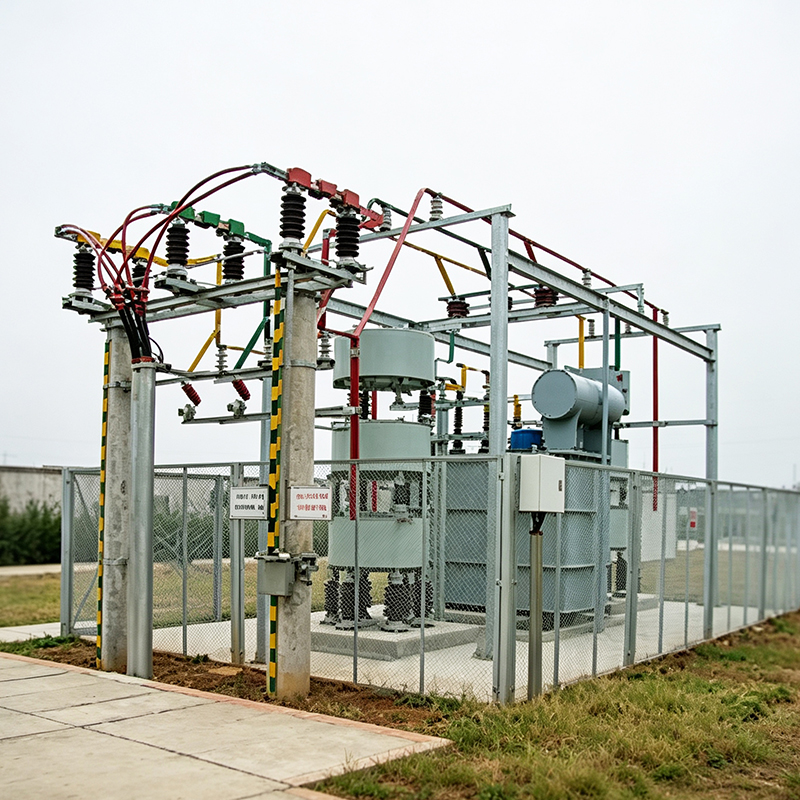
Several factors influence whether a low voltage or High Voltage Capacitor makes more sense for a given application. The location of the installation is one of the first considerations. A device located near the point of use, in a commercial building or small facility, will likely be low voltage. A device located at a substation or a large industrial plant will likely be high voltage.
The load profile matters as well. A system with steady, continuous demand has different needs than one with variable loads. The steady system benefits from larger, slower units. The variable system needs faster, more responsive equipment. The load profile helps determine the appropriate voltage class.
Harmonic content is another factor. Non-linear loads generate harmonics that can disrupt capacitor operation. Equipment designed for high harmonic environments has different characteristics than equipment used in clean power systems. The selection process accounts for the harmonic environment.
Maintenance requirements should not be overlooked. Low voltage equipment is easier to service. The units are smaller, lighter, and more accessible. High voltage equipment needs specialized skills and more time. Facilities with limited maintenance resources may prefer the lower voltage option.
Life-cycle costs go beyond the initial purchase price. Energy losses, maintenance, and replacement costs all factor into the total. A high voltage unit may cost more upfront but last longer. A low voltage unit may be cheaper initially but need more frequent attention. The comparison requires a long-term view.
Looking Ahead: The Future of Capacitor Voltage Classes
The industry continues to evolve, and the relationship between voltage classes will change further. Several trends are worth watching.
DC systems are becoming more common. Data centers, renewable energy installations, and certain industrial processes operate on DC. The move toward DC changes the capacitor landscape. DC capacitors differ from AC capacitors in their construction and their failure modes. The transition to DC may blur the lines between low and high voltage classifications.
Solid-state capacitors represent another development. These devices use semiconductor technology to achieve variable capacitance. The output can be adjusted continuously rather than in discrete steps. The flexibility opens up new possibilities for both low and high voltage applications.
The modular approach to system design may continue to gain ground. Instead of building one large high voltage system, designers may opt for multiple low voltage units distributed across the facility. The distributed approach offers redundancy and flexibility that a single large unit cannot match.
The skills required to work on capacitor systems are also changing. Engineers and technicians need to understand both voltage classes. They need to know when to use one and when to use the other. The training and education of the workforce will need to keep pace with the technology.
Low voltage capacitors and High Voltage Capacitors serve different purposes. The two classes are not in competition. They are complementary. The low voltage unit handles localized needs. The high voltage unit handles bulk requirements. Both are necessary for a functioning power system.
The relationship between the two has shifted over time. Low voltage units now do things that once required high voltage equipment. High voltage units have become more efficient and more controllable. The technology in both classes has improved.
The future will bring more changes. The voltage classes may become less distinct. New materials and new designs may produce equipment that does not fit neatly into either category. The boundaries that exist today may not exist tomorrow.
For the professionals who design and operate these systems, the key is to stay informed. The equipment available continues to change. The demands on the system continue to grow. Understanding the capabilities of each voltage class remains essential for making the right choices.
Recommended Products
The variety of models, to meet the development needs of various regions in the world.
Copyright © Shanghai Yongjin Electric Technology Co.,Ltd.

China Power Quality Solutions Supplier