English
 中文简体
 русский
 Español
 عربى
Industry News
Home / News / Industry News / What Insulation Standards Should Buyers Check When Sourcing Step Ladder For Electrical Work
An ordinary aluminum step ladder may be perfectly suitable for warehouse maintenance, but it is a poor choice around exposed electrical equipment. Metal conducts electricity, and accidental contact with an energized component can put the worker at serious risk. This is one reason fiberglass ladders are commonly used by electricians and maintenance teams.
However, buying a fiberglass ladder is not enough. The quality of the resin, fiberglass reinforcement, structural construction and electrical testing all affect its suitability. A Step Ladder For Electrical Work should have supporting product documentation rather than relying on a supplier's claim that it is nonconductive.
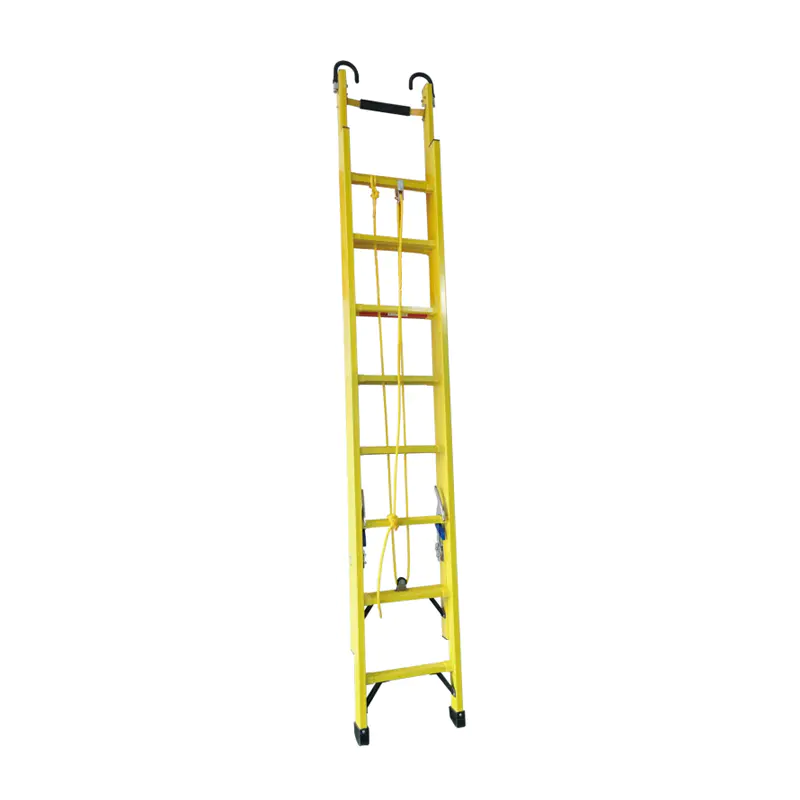
Why Fiberglass Is Preferred for Electrical Work
Aluminum and steel ladders provide good mechanical strength, but both are electrically conductive. If a metal ladder touches an energized wire or electrical component, it can create a dangerous path for current.
Fiberglass-reinforced plastic offers a different option. Its electrical conductivity is generally low when the material is properly manufactured, making it suitable for many electrical maintenance applications.
The important distinction is that not all fiberglass ladders have identical insulation properties. Resin formulation, fiber quality, surface condition and manufacturing consistency all matter. Moisture, dirt, metal particles and damaged surfaces can also affect electrical performance.
Buyers should therefore ask for electrical test records and confirm that the specific ladder model is designed for electrical work. A general description such as "fiberglass construction" is not sufficient evidence.
ANSI and OSHA Requirements in the US Market
Two important references for US buyers are ANSI A14.5 and OSHA ladder regulations.
ANSI A14.5 covers portable reinforced plastic ladders, including requirements concerning fiberglass ladder construction, testing and performance.
OSHA 29 CFR 1910.23 addresses ladder safety in general industry. Its requirements cover ladder condition, use and workplace responsibilities.
For construction sites, OSHA 29 CFR 1926.1053 provides additional requirements for ladder use.
These documents serve different purposes. ANSI A14.5 focuses on product design and performance, whereas OSHA establishes workplace safety requirements. A supplier saying that a ladder meets OSHA requirements should be able to explain exactly what documentation supports that statement.
Buyers should also check the applicable standard edition and product classification before ordering.
What to Check in Fiberglass Insulation Tests
The word fiberglass does not tell buyers how well a finished ladder performs electrically. Two products made from reinforced plastic may have different resin compositions, surface finishes and insulation characteristics.
When reviewing a manufacturer's technical documentation, pay attention to:
The test conditions matter. A resistance result without information about the testing method or conditions provides limited evidence for comparison.
There is also an important safety boundary: a fiberglass ladder is not permission to work on energized equipment without appropriate protection. Electrical isolation, lockout/tagout procedures, safe approach distances and suitable PPE remain essential.
Standards Buyers May Encounter
Different standards cover different ladder categories and markets. They should not be treated as interchangeable.
| Standard or regulation | Main focus | What buyers should verify |
|---|---|---|
| ANSI A14.5 | Reinforced plastic portable ladders | Fiberglass ladder design and performance |
| ANSI A14.2 | Portable metal ladders | Requirements for metal ladder products |
| OSHA 1910.23 | General industry ladder safety | Workplace condition and use |
| OSHA 1926.1053 | Construction ladder safety | Requirements for construction-site use |
| EN 131 | Portable ladders in European markets | Product classification and relevant test compliance |
For example, EN 131 compliance does not automatically demonstrate compliance with ANSI A14.5. Buyers supplying multiple markets should specify the required standard for each destination rather than accepting a general certification statement.
Load Capacity and Structural Construction Still Matter
Electrical insulation is only one part of ladder safety. The ladder must also support the worker, tools and materials without losing stability.
Common US ladder duty ratings include:
| Duty rating | Maximum intended load |
|---|---|
| Type III | 200 lb |
| Type II | 225 lb |
| Type I | 250 lb |
| Type IA | 300 lb |
| Type IAA | 375 lb |
Buyers should check the rating marked on the actual product and confirm the applicable standard requirements.
Other construction details deserve inspection. Fiberglass side rails should have consistent profiles without visible cracks or surface defects. Steps need secure attachments and suitable anti-slip surfaces. Spreaders and locking mechanisms must hold the ladder firmly in its open position, while the feet should provide adequate grip on the intended flooring.
Loose fasteners or poorly assembled joints can undermine an otherwise well-designed ladder. Structural quality and electrical performance need to be assessed separately.
Manufacturing Quality Can Affect Both Safety and Consistency
Fiberglass ladder production requires control over resin distribution, fiber alignment and finished profile dimensions. Variations during production may affect mechanical strength as well as electrical properties.
When evaluating a supplier, ask how these characteristics are checked. Relevant quality procedures may include:
For large orders, buyers should request inspection records and agree on acceptance criteria before production begins. It is also worth finding out whether the manufacturer conducts periodic batch testing or relies mainly on initial product qualification.
Environmental Exposure and Regular Inspection
A ladder that passes its initial tests may deteriorate through prolonged exposure to sunlight, chemicals, abrasion and rough handling.
Conductive contamination is another concern. Grease, water, metal particles and industrial dust on the fiberglass surface can compromise safe use. Before each use, workers should check for cracks, damaged surfaces, loose steps, worn feet and defective spreaders.
A ladder with damaged fiberglass components should be removed from service and assessed according to the manufacturer's instructions. Improvised repairs may affect both structural integrity and electrical insulation.
A Buying Checklist for Electrical Step Ladders
Before approving a supplier, procurement teams should confirm that the ladder is specifically designed for electrical applications, obtain relevant product-standard documentation, review insulation test conditions and verify the load rating. Material traceability, assembly quality and maintenance instructions should also be included in the supplier assessment.
For contractors and distributors, the distinction between a fiberglass ladder and a properly tested electrical-use ladder is important. A Step Ladder For Electrical Work should be supported by identifiable test records, appropriate structural ratings and clear manufacturer instructions. These details provide a much stronger basis for purchasing than the material description alone.
The variety of models, to meet the development needs of various regions in the world.
Copyright © Shanghai Yongjin Electric Technology Co.,Ltd.

China Power Quality Solutions Supplier