English
 中文简体
 русский
 Español
 عربى
Industry News
Home / News / Industry News / Which Copper Wire Insulation Types Perform Best in High-Temperature Industrial Environments?
Copper is widely used in industrial wiring, but the insulation surrounding the conductor can become a weak point when temperatures rise. Near furnaces, motors, heating elements, or processing equipment, ordinary PVC insulation may soften or deteriorate much faster than expected.
Manufacturers have several alternatives, including silicone rubber, PTFE, FEP, PFA, and XLPE. They don't serve exactly the same purpose. Some remain flexible around hot machinery, while others are chosen for chemical resistance or high electrical insulation performance.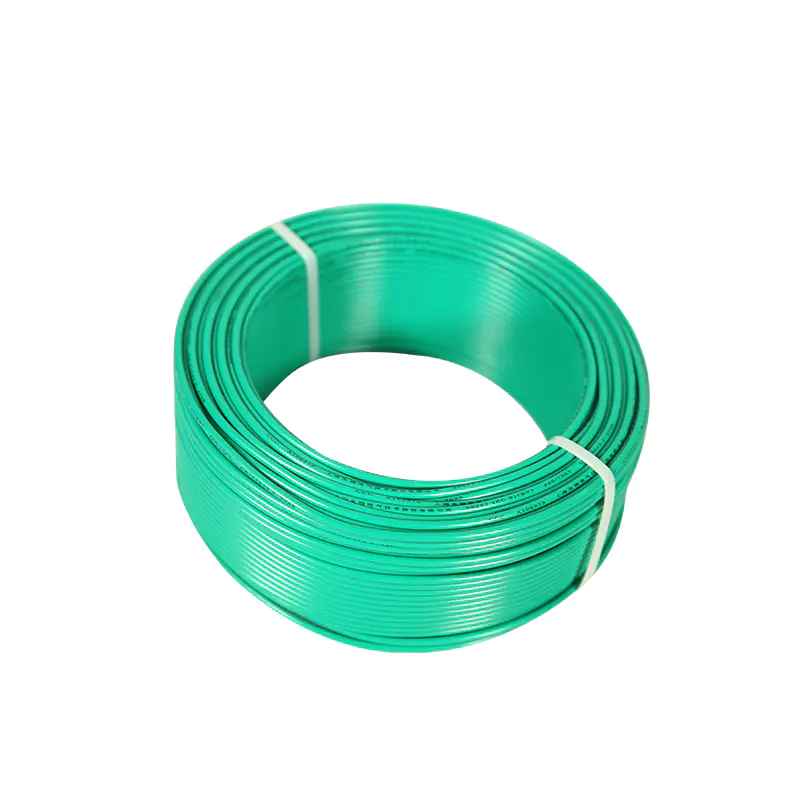
Silicone Rubber for Hot and Moving Connections
Silicone rubber is often used where a cable needs to tolerate heat without becoming stiff. It remains flexible over a relatively wide temperature range, making it useful for heating appliances, industrial machinery, and connections exposed to vibration.
Its softness is also a disadvantage. Silicone insulation can be damaged by sharp edges, rubbing, or repeated mechanical contact. Cables installed in exposed areas may need an additional protective sleeve or conduit.
When purchasing silicone-insulated copper wire, check the actual compound rating rather than relying on the general properties of silicone. Resistance to oils, cleaning chemicals, and mechanical wear can vary between formulations.
PTFE for High Temperatures and Chemical Exposure
PTFE (polytetrafluoroethylene) is used in applications where both heat and chemical resistance matter. It has excellent dielectric properties and withstands exposure to many industrial chemicals.
You'll commonly find PTFE-insulated wires in laboratory equipment, chemical processing machinery, heating systems, and compact electrical assemblies.
There are a couple of trade-offs. PTFE is more expensive than ordinary PVC, and its processing requires specialized manufacturing equipment. It can also deform under sustained mechanical pressure through a phenomenon known as cold flow. This needs attention around cable clamps, terminals, and tight installation points.
FEP and PFA for Specialized Wiring
FEP and PFA are fluoropolymer insulation materials with good chemical resistance and electrical stability. Both are used in industrial applications where conventional plastics may not tolerate the operating environment.
FEP is often selected for its combination of thermal resistance, electrical insulation, and relatively straightforward processing. PFA offers similar properties and can support higher-temperature applications, depending on the grade.
Their cost is generally higher than that of common cable insulation. For OEM projects, manufacturers should provide the material grade, continuous operating temperature, and relevant electrical test data. A general description of FEP or PFA is not enough to establish the rating of a finished cable.
XLPE for Industrial Power Wiring
Cross-linked polyethylene (XLPE) is commonly used in industrial power cables. Its cross-linked structure improves heat resistance and mechanical stability compared with conventional polyethylene.
Many XLPE cable designs have a continuous conductor temperature rating of approximately 90°C under specified conditions. Higher short-circuit limits may apply for brief periods, but these are not continuous operating ratings.
XLPE is widely used for motor feeders, fixed installations, and industrial power distribution. It is not intended for the same extreme-temperature conditions as PTFE or PFA, but it can be a practical option for electrical systems operating within its rated limits.
Comparing Copper Wire Insulation Materials
The following figures are general reference ranges. Actual ratings vary with material formulation, cable construction, and applicable standards.
| Insulation material | Typical continuous temperature range | Main characteristics | Limitations |
|---|---|---|---|
| PVC | Around 70–105°C | Low cost and widely available | Limited high-temperature capability |
| XLPE | Commonly around 90°C | Good electrical and thermal properties | Unsuitable for extreme heat |
| Silicone rubber | Often 150–200°C | Flexible and heat-resistant | Relatively vulnerable to abrasion |
| FEP | Often around 200°C | Chemical resistance and electrical stability | Higher material cost |
| PTFE | Often around 260°C | Excellent heat and chemical resistance | Cold-flow behavior and processing cost |
| PFA | Often around 250–260°C | High thermal and chemical resistance | More expensive material |
These figures should not replace the cable manufacturer's datasheet. The insulation rating, conductor temperature limit, and complete cable construction must all be considered.
Heat Is Not the Only Thing That Damages Wire Insulation
A cable installed near a furnace faces different conditions from one routed through a moving production machine. The first may need greater thermal resistance, while the second also needs to withstand repeated bending and abrasion.
Chemical exposure can create another problem. Oils, solvents, acids, and cleaning agents may attack certain insulation compounds even when the operating temperature is within range.
Electrical requirements matter too. Buyers need to check rated voltage, dielectric strength, insulation thickness, and the relevant flame and smoke requirements.
Installation conditions deserve attention. Several cables bundled together may retain more heat than an individual wire installed in open air. A cable rated for a particular temperature cannot automatically carry its full rated current in every installation.
Choosing Insulation for Different Industrial Applications
For flexible wiring near heating equipment, silicone rubber is often considered. PTFE, FEP, and PFA are more common in chemical processing and specialized high-temperature assemblies. XLPE is widely used in fixed power distribution, while PVC remains suitable for many ordinary electrical installations.
The application should determine the material, not simply the highest temperature printed in a catalogue. A cable that handles high temperatures but cannot withstand the required bending or chemical exposure may fail prematurely.
When sourcing Copper Wire, ask suppliers for the exact insulation grade, temperature rating, voltage specification, and supporting test reports. For demanding installations, testing samples under actual operating conditions can reveal problems that a material datasheet alone will not show.
The variety of models, to meet the development needs of various regions in the world.
Copyright © Shanghai Yongjin Electric Technology Co.,Ltd.

China Power Quality Solutions Supplier