English
 中文简体
 русский
 Español
 عربى
Industry News
Home / News / Industry News / When Should Buyers Choose a Shunt Power Capacitor Bank Instead of Individual Capacitors?
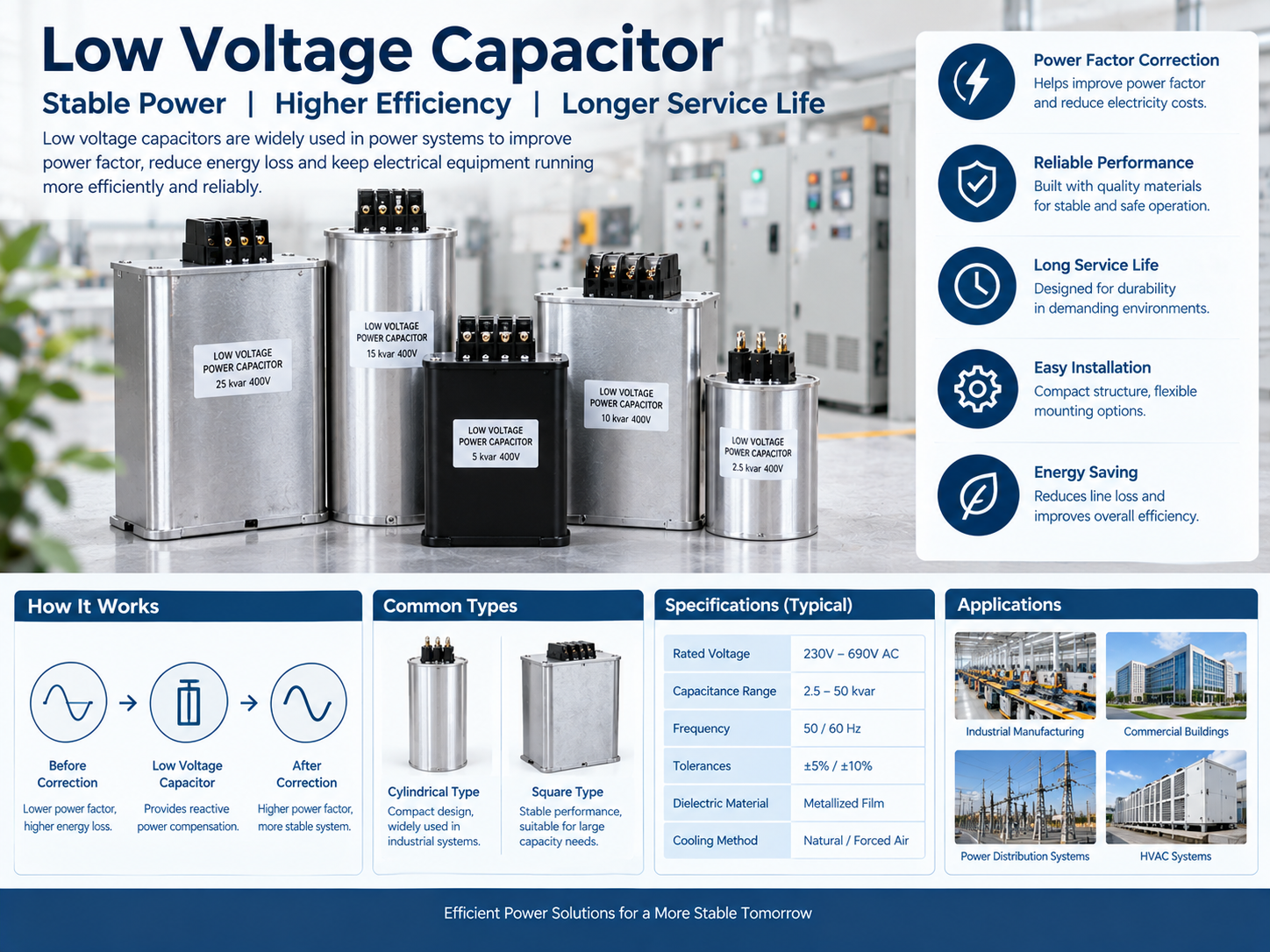
Power factor correction is an important consideration for industrial facilities, commercial buildings, and electrical distribution systems with significant inductive loads. Motors, transformers, pumps, and HVAC equipment consume reactive power, which can increase current flow, contribute to distribution losses, and reduce the available capacity of electrical infrastructure.
Choosing between a Shunt Power Capacitor bank and individual capacitor units depends on the load profile, compensation requirements, installation environment, and long-term operating costs. Both options can improve power factor when correctly selected, but they serve different operational needs. Understanding these differences helps electrical engineers, procurement teams, and facility managers make better investment decisions.
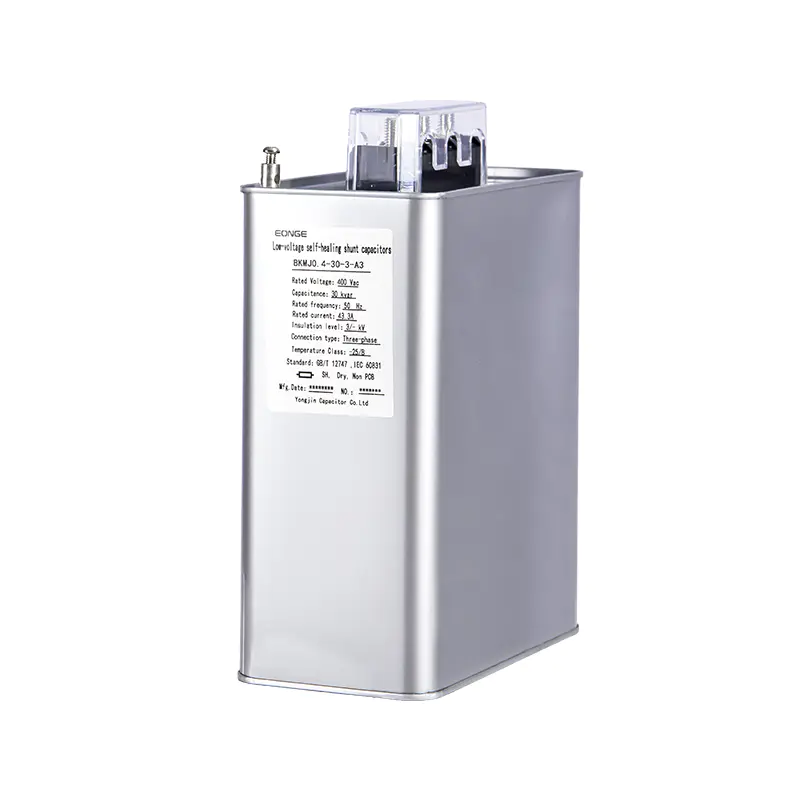
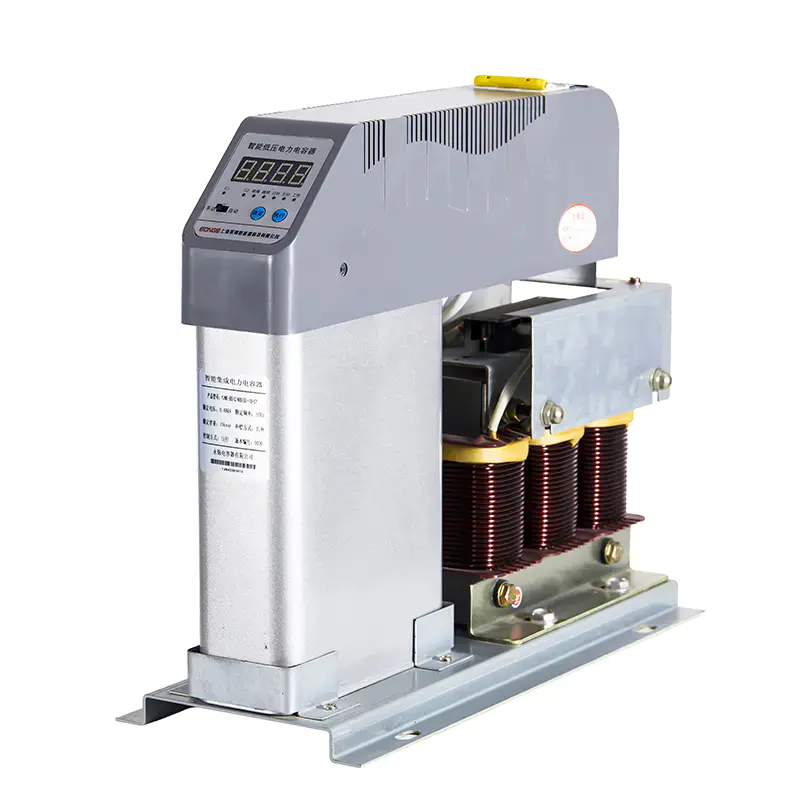
A shunt power capacitor bank is particularly suitable when a facility requires substantial reactive power compensation at a common point in the electrical system. Multiple capacitor units are connected in parallel to provide the required total capacitance and reactive power rating.
This arrangement is commonly used in manufacturing plants, commercial facilities, substations, and distribution networks.
A capacitor bank is often the preferred option when:
The final design should account for load variation, system voltage, short-circuit strength, and harmonic conditions. A bank that is oversized or poorly coordinated with the load can create operating problems even when its nominal rating appears appropriate.
Individual capacitors are often appropriate when compensation is needed for a small number of specific loads or when electrical equipment is distributed across a large site.
Installing a capacitor near an inductive load can reduce the reactive current drawn through portions of the upstream distribution system. This approach may be useful for large motors that operate regularly at a relatively consistent load.
Individual capacitor units may be preferable when:
Local compensation still requires correct equipment selection and protection. The capacitor rating must match the electrical system and operating conditions, and switching arrangements must be suitable for the associated load.
The following table summarizes the main selection considerations.
| Selection factor | Shunt power capacitor bank | Individual capacitor units |
|---|---|---|
| Typical application | Centralized facility or distribution-system compensation | Dedicated machinery or localized loads |
| Reactive power capacity | Suitable for larger combined requirements | Suitable for individual or smaller loads |
| Load variation | Can use automatic multi-stage switching | Often fixed to the associated load |
| Installation arrangement | Concentrated at a common electrical point | Distributed near selected equipment |
| Maintenance | Centralized inspection and servicing | Maintenance across multiple locations may be required |
| Expansion | Additional stages may be possible if the design allows | Units can be added to individual loads as needed |
| Main design concern | Switching coordination, harmonics, and bank protection | Load matching, local protection, and switching compatibility |
Neither configuration is universally superior. The most effective choice depends on where reactive power is consumed, how demand changes, and how the existing electrical system is arranged.
Load behavior is one of the most important factors in capacitor selection.
A facility with relatively stable demand may be able to use a fixed capacitor bank sized for its normal operating conditions. However, if production lines start and stop frequently, reactive power demand can change substantially throughout a shift.
In these cases, an automatic capacitor bank can switch individual stages in response to measured power factor or reactive power demand. This helps avoid excessive compensation during low-load periods.
Individual capacitors can also work well for loads with predictable operating schedules. For example, a suitably selected capacitor connected to a consistently operating motor can provide local compensation when the motor runs, provided the switching and protection arrangement is correctly designed.
Engineers should review interval demand data, motor operating patterns, and minimum-load conditions before deciding between fixed and switched compensation.
Capacitor banks can interact with system inductance and create resonance conditions. This risk is particularly important in facilities with variable-frequency drives, rectifiers, UPS systems, and other nonlinear loads.
Harmonic measurements and an appropriate system study can help determine whether the installation needs detuned reactors, harmonic filtering, or another mitigation strategy. Adding capacitors without evaluating the harmonic environment may amplify certain harmonic components and increase equipment stress.
Protection design also deserves careful attention. Depending on the configuration, a capacitor installation may require fuses or other overcurrent protection, switching devices rated for capacitor duty, discharge provisions, and suitable overvoltage protection. Larger banks may also require unbalance protection and additional monitoring.
Applicable IEC or IEEE requirements and local electrical codes should guide the final design. The relevant standard and edition depend on the equipment, voltage level, jurisdiction, and application.
The initial purchase price is only one part of the decision. A centralized bank may simplify maintenance and control, while a distributed arrangement may reduce reactive current through selected feeder sections. Installation costs, enclosure requirements, cable runs, switching equipment, and downtime can change the overall economics.
Before purchasing, evaluate these factors:
For example, a factory with several production lines and fluctuating demand may benefit from a centrally controlled capacitor bank. A facility with a few large motors operating on predictable schedules may achieve its objectives with individual capacitors installed near those loads. In some installations, a combination of centralized and local compensation is the most practical solution.
Buyers should select a Shunt Power Capacitor bank when centralized, scalable, or automatically controlled compensation best matches the facility’s reactive power demand. Individual capacitors are often a practical fit for dedicated loads that need localized correction.
Before finalizing a purchase, have a qualified electrical engineer assess the load profile, compensation target, harmonics, protection requirements, and installation conditions. This engineering review helps ensure the selected solution improves power factor without introducing avoidable resonance, switching, or overcompensation problems.
The variety of models, to meet the development needs of various regions in the world.
Copyright © Shanghai Yongjin Electric Technology Co.,Ltd.

China Power Quality Solutions Supplier