


 English
 中文简体
中文简体 русский
 Español
 عربى
عربى
Industry News
What Role Does High Voltage Capacitor Play In Industrial Equipment
Industrial equipment rarely stays in a steady electrical state. Machines start, pause, adjust speed, then repeat the same movement across long working periods. Electrical conditions inside the system move along with those changes. A High Voltage Capacitor usually shows up in the middle of that environment, especially in sections where energy shifts feel uneven.
In many real setups, the circuit is split into different working zones. One zone handles control signals, another carries power flow, and a third sits between them. That middle area often deals with sudden changes. A capacitor placed there does not create power, it mainly smooths what is already moving through the system.
In practical behavior, its presence is usually tied to:
- softening sudden jumps when switching happens
- keeping energy movement from becoming too sharp
- reducing ripple that appears in power lines
- helping control parts avoid unstable input
The role is quiet. It works in the background while other parts handle the main load.
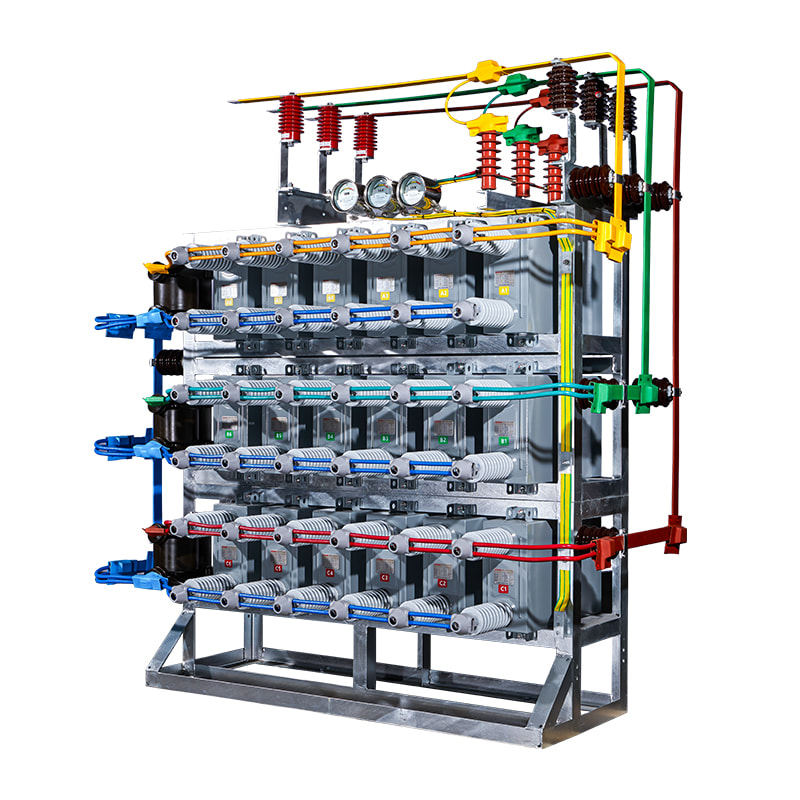
How High Voltage Capacitor Supports Energy Storage In Industrial Systems
Energy storage in a High Voltage Capacitor does not behave like long-term storage. It is closer to a short pause of energy inside the circuit. Charge enters, sits briefly, then leaves when the system asks for it.
Industrial machines create this kind of demand all the time. A motor may slow down, then suddenly need more torque. A control unit may switch states and draw different levels of current. These changes do not happen in a smooth line.
Inside that flow, the capacitor reacts like a small buffer:
- holds charge during light load moments
- releases energy when demand rises quickly
- reduces pressure on main supply lines
- fills short gaps during transition phases
Nothing stays static. The energy inside keeps moving in short cycles, adjusting to what the system is doing at that moment.
| System Condition | Capacitor Response | Practical Effect In Equipment |
|---|---|---|
| Sudden Load Increase | Releases stored energy quickly | Reduces pressure on main power line |
| Stable Operation | Minimal charge movement | Maintains steady internal balance |
| Load Drop | Absorbs excess energy | Prevents voltage fluctuation |
| Frequent Switching | Repeated charge cycles | Supports smoother transition behavior |
| Long Continuous Operation | Gradual heat buildup | Requires stable thermal design |
What Happens Inside High Voltage Capacitor During Charge And Discharge Cycles
Inside the structure, two conductive layers face each other with a dielectric layer in between. When voltage enters, one side collects charge while the opposite side balances it. The dielectric keeps the separation stable.
In industrial use, this process repeats many times without long breaks. Each cycle is small, but over time the repetition builds a pattern inside the component.
What happens during normal operation can be seen in steps:
- charge starts building on one surface
- internal field forms across the dielectric layer
- energy stays stored for a short moment
- release happens when circuit demand changes
During repeated cycles, slight heating appears inside the material. It is not sudden, more like a slow buildup from constant movement of charge. Over long operation, this internal movement becomes part of the working condition of the component.
How High Voltage Capacitor Contributes To Filtering Functions
Industrial circuits generate small electrical disturbances all the time. Switching actions, motor movement, and load shifts create noise inside the system. Without control, these disturbances can spread into other parts of the circuit.
A High Voltage Capacitor helps reduce that effect by taking in quick changes and flattening them out. It does not remove all variation, only softens the sharp edges of electrical movement.
In practical use, filtering shows up like this:
- fast spikes in voltage become less sharp
- noise from switching is partly absorbed
- signal paths stay closer to stable levels
- unwanted movement stays local instead of spreading
In real equipment, this function is often invisible during normal operation. It only becomes noticeable when stability is missing.
Why Stability Matters In Industrial Equipment Performance
Industrial systems depend on consistent electrical behavior. When voltage moves too quickly or unevenly, different parts of the machine may respond in slightly different ways. That difference builds up over time.
A High Voltage Capacitor helps slow down those changes. It does not freeze the system, it only reduces how quickly variations travel through it.
In real working conditions, stability affects:
- smooth start and stop of motors
- steady response in control circuits
- predictable sensor feedback
- reduced disturbance across connected modules
Even small irregularities, when repeated, can affect how a machine feels during operation. Stability keeps those small changes under control.
Where High Voltage Capacitor Is Commonly Used In Industrial Layouts
Placement inside industrial equipment depends on how energy flows through the system. A capacitor is not placed randomly. It is usually found where movement of power changes direction or intensity.
Common placement areas include:
- near power conversion sections where voltage shifts occur
- close to motor drive paths with changing load behavior
- between power and control regions in shared systems
- along distribution lines that carry mixed energy flow
Each position creates a slightly different working condition. In some places, the capacitor deals with smoothing. In others, it handles short bursts of energy imbalance.
How Load Fluctuation Affects High Voltage Capacitor Behavior
Load in industrial systems rarely stays fixed. Machines move through cycles, and each cycle changes how much energy is drawn from the circuit. A High Voltage Capacitor responds directly to those shifts.
When load increases suddenly, stored energy is released into the system. When load drops, excess energy is absorbed. This exchange happens repeatedly during normal operation.
Over time, repeated fluctuation creates visible patterns:
- frequent charge and release cycles
- uneven heat distribution inside the component
- changing stress levels on internal layers
- shifting balance in energy movement
The changes are not instant. They appear slowly through repeated operation, especially in systems with frequent switching activity.
What Material Structure Means For High Voltage Capacitor Performance
Inside a High Voltage Capacitor, the material layers decide how the whole component behaves under stress. The dielectric layer sits in the middle and carries most of the responsibility for keeping charge separated. Once that layer starts to weaken under pressure, performance changes slowly across time rather than all at once.
Industrial environments make this structure work harder than simple circuits. Heat appears during repeated switching. Electric fields shift during load changes. The material keeps reacting to those movements in a continuous way.
What matters in real operation:
- dielectric layer holding separation under repeated stress
- conductive layers managing charge movement without collapse
- internal spacing influencing stability under heat
- material response changing with long use cycles
Even when nothing looks damaged from outside, the internal structure can still be adjusting to long-term electrical activity.
How Industrial Equipment Uses Capacitor Networks Instead Of Single Units
In many industrial systems, one capacitor is rarely used alone in high stress sections. Instead, multiple units are arranged together. This approach spreads electrical load across several paths instead of concentrating it in a single point.
That structure helps the system handle uneven demand more calmly. When one part of the circuit experiences stronger movement, nearby components share part of the load.
Typical network behavior includes:
- distribution of charge across multiple units
- reduced stress on a single capacitor body
- smoother response during load changes
- more stable operation during switching cycles
In real layouts, this arrangement often sits close to power-heavy sections where energy movement changes direction frequently. The system behaves more steadily when load is divided rather than forced through one component.
What Role High Voltage Capacitor Supplier Plays In System Integration
In industrial use, selection of components is not only about electrical rating. A High Voltage Capacitor Supplier often becomes part of the design process because different systems need different behavior under stress.
Matching involves more than numbers on a label. Engineers usually look at how a component behaves under repeated load, how heat spreads through the structure, and how it fits into the wider circuit design.
Practical considerations include:
- consistency between components used in the same system
- suitability for long operation cycles
- response under mixed load conditions
- compatibility with surrounding circuit structure
A stable supply chain helps maintain uniform behavior across systems that operate for long periods without interruption.
Common Design Issues In High Voltage Capacitor Application
Some problems in industrial circuits do not appear immediately. They build slowly through placement choices or mismatched expectations. One common issue is placing a capacitor in a zone where electrical stress is higher than intended.
Another issue appears when heat buildup is not considered. Industrial equipment often runs in enclosed environments where airflow is limited. Over time, temperature changes affect internal stability.
Frequent design issues include:
- placing components too close to high stress switching areas
- ignoring heat accumulation around dense circuit sections
- mixing control and power zones without clear separation
- expecting one component to handle uneven load conditions
These situations usually do not cause immediate failure. Instead, performance shifts gradually until instability becomes noticeable in operation.
How Industrial Systems Maintain Long-Term Electrical Stability
Large systems rely on structure rather than single components to maintain stability. High Voltage Capacitor units are part of that structure, working alongside layout design and load distribution.
One important method is separation of electrical zones. Power sections handle energy transfer, while control sections manage signals. Between them, buffer areas help smooth transitions so changes do not spread too quickly.
In practical operation, stability comes from:
- dividing power and control pathways
- placing buffering components in transition zones
- balancing load movement across circuit paths
- reducing sudden changes in energy direction
When these conditions are in place, the system tends to behave in a more predictable way over long working periods.
A High Voltage Capacitor in industrial equipment is not only a storage element. Its role stretches across energy balancing, filtering, and stabilizing movement inside complex circuits. It reacts to change rather than controlling it directly.
In systems where load shifts often, its presence helps reduce sharp transitions and smooth internal energy flow. Placement, structure, and surrounding design decide how well it performs that role.
Industrial behavior depends on many small interactions rather than a single point of control. Within that network of movement, capacitors act as quiet stabilizers, keeping electrical shifts from becoming too abrupt while supporting steady system operation over time.

Recommended Products
The variety of models, to meet the development needs of various regions in the world.
Copyright © Shanghai Yongjin Electric Technology Co.,Ltd.

China Power Quality Solutions Supplier