English
 中文简体
中文简体 русский
 Español
 عربى
عربى
Industry News
Home / News / Industry News / Whether a DC Link Capacitor Requires Different Sizing Than an AC Capacitor
A capacitor may have a similar appearance across different electrical systems, yet its required size depends heavily on how and where it works. A DC Link Capacitor operates on a direct-current section of a power circuit, while a High Voltage AC Capacitor is designed around changing voltage and current conditions. Comparing physical size alone can therefore give an incomplete picture.
Capacity is only one part of the selection process. Working voltage, current variation, frequency, heat, cooling, installation space, and expected operating conditions can all influence the final design. A capacitor with a larger body is not automatically suitable for a particular circuit, just as a smaller unit is not automatically unsuitable.
DC link applications often require the capacitor to remain connected to a changing electrical load for extended periods. Current movement through the circuit can create internal heat, while voltage stability remains important for nearby components. AC applications have a different pattern because voltage changes continuously during operation.
For practical sizing, several questions should be considered together:
A useful comparison therefore starts with working conditions rather than dimensions. Once electrical and thermal requirements are clear, physical size becomes easier to evaluate.
A DC Link Capacitor sits within a direct-current section between different parts of a power system. Its role is closely related to voltage stability and the handling of changing electrical demand. When current in the circuit changes, stored electrical energy can help smooth part of that variation.
Such a position creates particular demands on the capacitor. Rather than simply storing charge, the component works as part of a changing electrical environment. Current may move into and out of the capacitor repeatedly, creating internal losses and heat.
Operating temperature is therefore connected with sizing. A capacitor that experiences considerable electrical activity needs enough ability to handle the resulting heat within its intended working range. Physical construction, internal materials, and available cooling space can all influence the final dimensions.
Installation also matters. A DC link capacitor placed inside a compact enclosure may face different thermal conditions from one installed in a more open area. Nearby heat‑producing components can raise the surrounding temperature, leaving less room for heat to escape.
Voltage stability is another part of the picture. A capacitor needs to remain suitable for the voltage present in its section of the circuit, including normal changes during operation. Selecting capacity without considering voltage conditions can produce a design that does not match the actual electrical environment.
A High Voltage AC Capacitor works with voltage that changes direction during normal operation. Such repeated changes create electrical conditions that differ from those found on a direct‑current link.
Frequency becomes particularly relevant in AC applications. As frequency changes, the current associated with capacitive operation also changes. Internal losses and heat can therefore vary with the operating conditions, which may influence the required construction and cooling arrangement.
Voltage insulation also deserves attention. High‑voltage AC operation requires suitable separation between electrical parts and surrounding structures. Physical dimensions may increase as the design needs more room for insulation and safe electrical spacing.
Installation conditions can further affect size. An AC capacitor placed in an enclosure may need a different cooling arrangement from one installed in a well‑ventilated area. Nearby components, ambient temperature, and available airflow can all influence thermal behavior.
A direct comparison between an AC capacitor and a DC link capacitor should therefore consider more than nominal capacity. Similar capacity values do not mean that both components can share the same physical dimensions or operating conditions.
Voltage rating has a direct relationship with the way a capacitor is constructed. Electrical parts need suitable separation and insulation so that normal operating voltage can be handled without creating unwanted electrical paths.
As voltage requirements change, internal structure may need additional spacing or different insulating arrangements. Such changes can affect the length, diameter, thickness, or overall shape of a capacitor.
Working voltage should also be considered rather than relying only on a circuit's usual voltage. Electrical systems can experience changes during operation, and the capacitor needs to remain within its intended working range during normal conditions.
A practical sizing review can therefore include:
For a DC Link Capacitor, voltage conditions on the direct‑current side remain an important part of the selection process. A High Voltage AC Capacitor faces a different voltage pattern, so its insulation and construction cannot be judged using DC requirements alone.
Physical size often reflects several design decisions at once. Capacity, voltage handling, insulation, heat removal, and mechanical construction may all contribute to the final dimensions.
Current variation is another important factor in DC link applications. A DC Link Capacitor may experience repeated changes in current as connected equipment changes its electrical demand. Such current movement can produce internal losses, which appear as heat within the capacitor.
Heat has a close relationship with operating conditions. When internal temperature rises, the surrounding installation needs enough ability to carry heat away. A compact enclosure with limited airflow can therefore create different requirements from an open installation.
Ripple current should be considered together with expected operating time. A short period of changing current may place different demands on a capacitor from repeated operation over a long working period.
Physical size can increase when more internal material or greater heat‑handling ability is needed. Still, size should not be treated as a simple indicator of electrical capability. Two capacitors with similar external dimensions may have different internal designs and operating limits.
For DC link sizing, attention can remain on several connected factors:
A balanced design considers electrical load and thermal conditions together. Capacity alone cannot describe how a DC link capacitor will behave once it becomes part of an active power circuit.
Frequency becomes an important consideration when an AC capacitor operates under changing electrical conditions. As the frequency rises or falls, the current associated with capacitive operation can change as well. Such changes may influence internal heating and the way the component needs to be constructed.
A High Voltage AC Capacitor also needs to cope with repeated voltage changes during normal operation. Electrical stress is not determined by voltage alone, since operating frequency and current conditions work together. A capacitor intended for one application may therefore require a different physical arrangement when placed in another circuit.
Heat is closely related to frequency because electrical losses can increase under certain operating conditions. Once heat builds up inside a capacitor, surrounding air and installation space become part of the thermal picture. Limited airflow can make heat removal more difficult, while an open installation may provide a different cooling environment.
Frequency should therefore be checked alongside:
A simple comparison between AC and DC applications can miss such details. A DC link mainly deals with voltage and current behavior on a direct‑current side, while an AC capacitor operates with continuously changing electrical conditions.
Temperature has a close connection with capacitor life and operating stability. Heat may come from the capacitor itself or from nearby electrical components, so the surrounding installation cannot be separated from the sizing process.
A compact enclosure can hold heat around the capacitor, especially when airflow is limited. In a more open arrangement, heat can move away from the component more easily. Such differences may affect the required physical construction even when electrical requirements remain similar.
Cooling also depends on how components are positioned. Placing a capacitor too close to another heat‑producing part can restrict airflow and raise the surrounding temperature. Adequate clearance can make thermal management easier.
Environmental temperature should also be considered. A capacitor installed in a warm location begins operation from a higher temperature, leaving less room for additional heat generated during electrical operation.
Sizing therefore needs to account for both electrical and thermal conditions. A larger housing may provide additional internal space or a greater surface area for heat transfer, although external dimensions alone do not reveal the complete electrical characteristics.
Sizing starts with the actual working conditions of the circuit rather than with a preferred physical shape. Voltage and capacitance remain basic considerations, while current, frequency, temperature, and installation conditions add further information.
For a DC Link Capacitor, attention should be given to the voltage present on the direct‑current side and the current changes produced during operation. Heat generated by repeated current movement can also affect the required design.
A High Voltage AC Capacitor requires attention to changing voltage, operating frequency, insulation requirements, and surrounding temperature. Installation conditions may also influence the final physical arrangement.
A useful checklist can include:
| Condition | Why It Matters | Possible Influence on Size |
|---|---|---|
| Working Voltage | Determines electrical stress | Insulation and internal spacing |
| Capacitance | Relates to energy storage needs | Internal construction |
| Current Variation | Can create internal heat | Thermal capacity |
| Frequency | Changes AC operating conditions | Loss and heat handling |
| Temperature | Affects operating environment | Cooling arrangement |
| Installation Space | Limits available dimensions | Shape and placement |
| Cooling | Controls heat removal | Housing and spacing |
Such a checklist helps prevent sizing from becoming a simple comparison of capacitance values. Two components with similar capacitance may still have different dimensions because their voltage, frequency, thermal, or insulation requirements are not the same.
Some basic considerations apply to both types of capacitors. Working voltage, capacitance, temperature, installation space, and cooling all matter when selecting a component. From that point onward, the actual circuit conditions begin to separate the two applications.
A DC Link Capacitor works on a direct‑current section and commonly handles changes in current associated with connected loads. Thermal behavior and voltage stability therefore receive close attention.
A High Voltage AC Capacitor operates with changing voltage and frequency. Insulation, electrical spacing, frequency‑related current, and heat generation become important parts of the sizing process.
Using the same physical size for both applications cannot be justified simply because the capacitance appears similar. Construction requirements may differ even where the basic electrical value looks comparable.
A practical comparison can focus on three areas:
Such an approach keeps the selection process connected to the actual circuit rather than to the appearance of the capacitor.
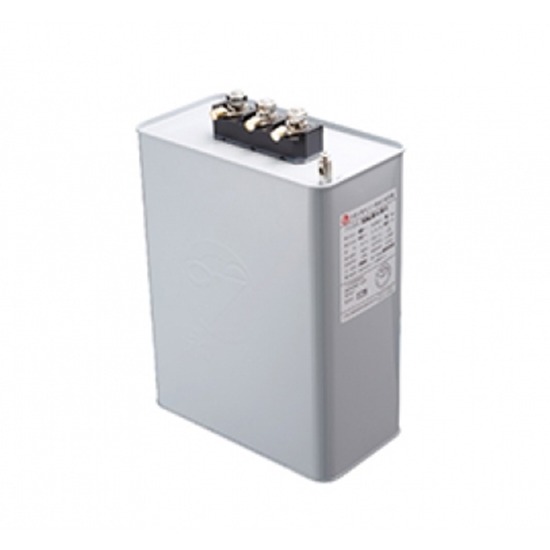
A suitable capacitor size comes from several requirements working together. Starting with capacitance alone can leave important conditions outside the selection process, especially when the component operates under changing current or high electrical stress.
For DC link applications, voltage, current variation, heat generation, and available cooling deserve close attention. A Handheld Welding Machine, for example, is not directly related to capacitor sizing, so equipment from another electrical application should not be used as a reference simply because both systems contain power electronics. The circuit itself remains the proper starting point.
For AC applications, voltage variation and frequency need to be considered alongside insulation and thermal conditions. A High Voltage AC Capacitor may require a different internal arrangement from a DC Link Capacitor even when both have a similar capacitance requirement.
Installation space should also be checked early. Width, height, depth, connection position, surrounding clearance, and airflow can all affect whether a chosen component fits the intended system.
A practical sizing process can move through the following order:
Capacitor sizing is therefore not simply a question of choosing a larger or smaller component. A DC Link Capacitor and a High Voltage AC Capacitor may require different dimensions because their electrical and thermal working conditions are different. Looking at the complete application gives a clearer basis for selecting a suitable size.
The variety of models, to meet the development needs of various regions in the world.
Copyright © Shanghai Yongjin Electric Technology Co.,Ltd.

China Power Quality Solutions Supplier